
Nobody drifts on purpose.
FORMED ON PURPOSE
Most of what's running a life, a team, or a home was installed by someone else — the standards, the tone, the pace. Formed on Purpose measures what's actually there, then helps install what should have been chosen: for the individual, for the organization they lead, for the home they run.
The same drift, in two places at once.
The inconsistency wearing down a leadership team and the inconsistency wearing down a home run on the same mechanism — standards that erode under pressure, a tone that shifts when nobody's watching. Most people are managing one. Almost nobody has been told it's the same problem in both places.
People change. Conditions change. Alignment drifts.
Teams evolve. Families grow. Pressure rises. Without standards and cadence, reactivity becomes the default.
Delayed repair — the hard conversation waits.
Blurred standards — the standard bends when it's inconvenient.
Reactive tone — the voice under pressure isn't the one anyone chose.
Inconsistent follow-through — the plan holds for a while, then quietly doesn't.
The missing layer is formation.
Formed on Purpose works at three levels — the individual, the organizations they lead, and the homes they run — because the same discipline applies in all of them. Different variables. Same principles.
Most of the structure that forms a person is supplied. School sets the schedule. A coach sets the standard. A household sets the tone, and someone always names the next step. Then, at some point, it stops — and nothing replaces it. Nobody mentions that it's gone. What doesn't get built on purpose gets built anyway: by pressure, by the job, by whoever happens to be in charge. The same gap shows up anywhere someone carries real responsibility — at work, at home, or simply in their own life.
Formation is either deliberate or default. Most of it just happens — and closing that gap is what this work is for.
The plan.
Diagnose drift. A structured diagnostic that shows where standards have blurred, where direction has gone unspoken, and where the response to real pressure has stopped being deliberate.
Install what holds. Facilitated installation of the standards, shared language, and direction that keep decisions consistent — inside an organization or inside a home.
Run the cadence. A repeatable rhythm — cadence, detection, and repair — that keeps alignment holding as the team, the family, and the conditions keep changing.
Complete and in publisher review, with release planned for 2027
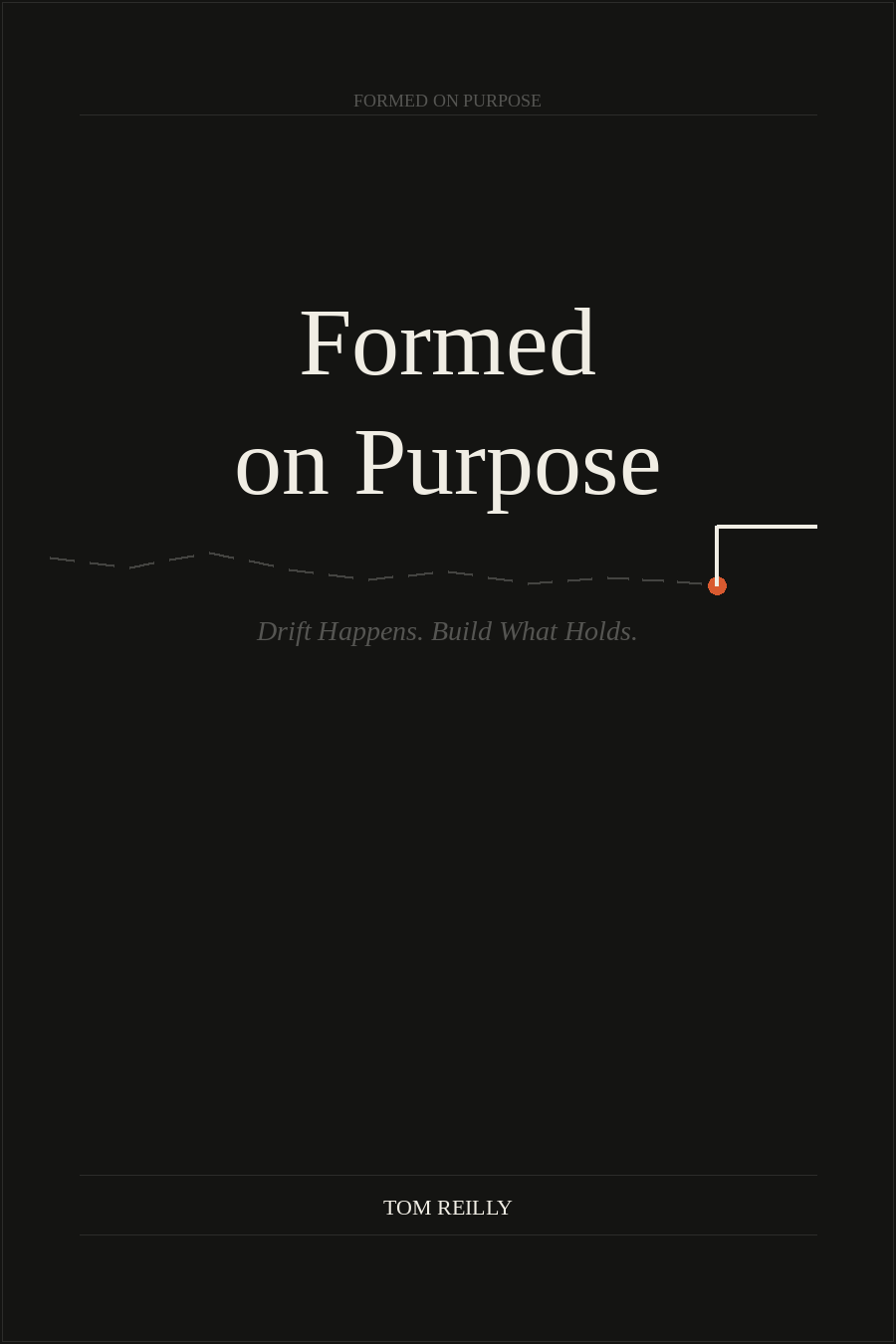
It's the long-form version of the argument behind this work: for two decades, formation is supplied — school, team, household, community. Then it's withdrawn, usually within a year, and nothing takes its place. The book is about what happens next, and what it takes to build the structure yourself.
Writing that clarifies the work.
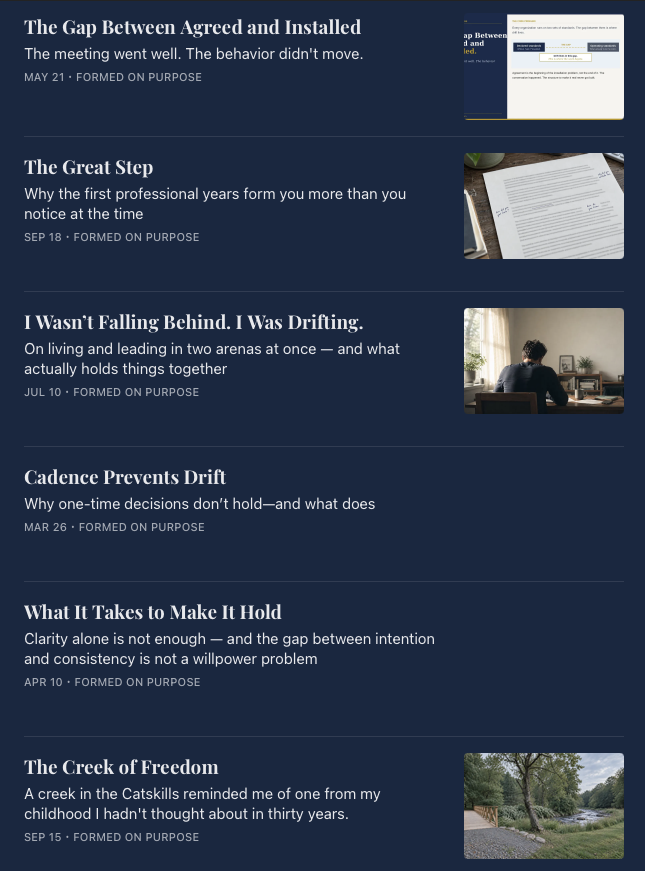
A growing library of essays on formation, pressure, standards, discipline, family, and leadership.
Start with the free layer.
Read the essays. Run the diagnostic. If drift is real, install the operating system.
Engagements are by inquiry. Whether the question is personal, organizational, or something happening at home, the diagnostic is the place to start — about five minutes, with a personal read sent back.